

The 60-Second Interview: Daniel Saynt, EVP of Digital at Nylon Media
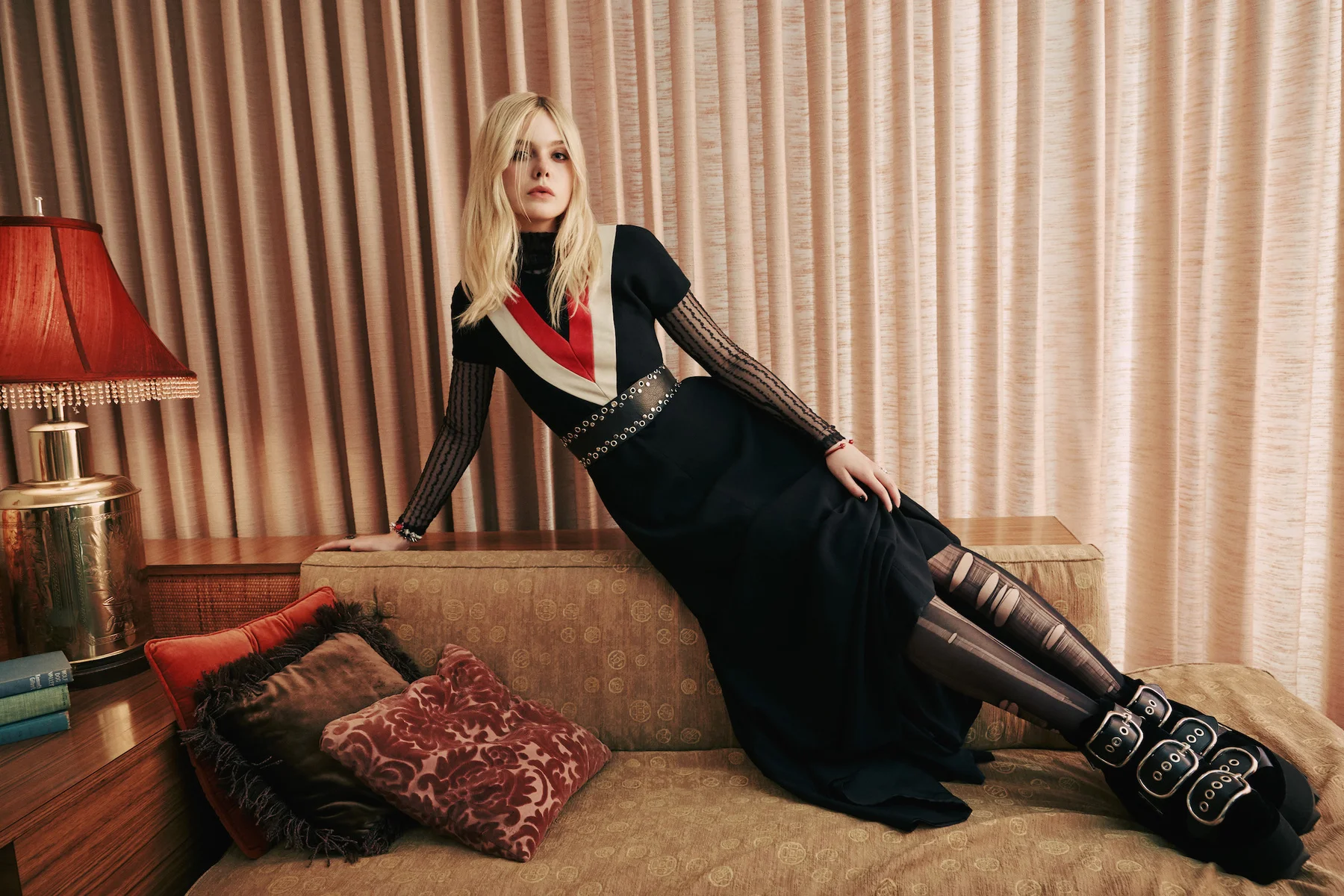
The 60-second interview: Daniel Saynt, Executive Vice President of Digital at Nylon Media.
CAPITAL: Nylon Media debuted its new domain name last week, saying goodbye to Nylonmag.com. Why pay a cybersquatter $225,000 for Nylon.com?
SAYNT: I think it’s really important for us to establish that this brand is more than just a magazine. I think NylonMag.com really does play into the fact that it is a magazine, it is a publication, and that will always still be a part of what our brand is. But there’s so much more to Nylon and there’s so much more to how we see the brand evolving that it’s extremely important for us to own our name. So paying the cybersquatter…the amount we had to pay was absolutely necessary. It was one of the main investments we knew we would have to make when [Diversis Capital] purchased the company, and it was something that we were surprised that it ended up being one of the most expensive domain name purchases for a fashion magazine or for a media company, but definitely worth it and it’s definitely something that will keep paying us back, many times over.
CAPITAL: Editor in chief Michelle Lee has dropped hints of Nylon.com offering more online exclusive content in the future. What kind of content should we expect?
SAYNT: With the purchase of Nylon, we merged with FashionIndie.com, which was a company that I started. FashionIndie.com has over 200 contributors and writers, many of which are top fashion bloggers and beauty bloggers. So what’s going to happen is you’re going to start seeing a lot more original content coming from these content producers. So more of the influencers giving us exclusive things that will not live on their sites and that will live exclusively on Nylon.com.
In addition, we’re increasing the amount of contributors that we have for the site itself. We just added Julia Shutenko (now Lundin), who’s a former [Vogue] market editor, who is based in London, who is our London correspondent...We also had contribution from [Michael Dumler of] OnAbbotKinney, a street-style photographer based out of L.A., who is now shooting a few of the music festivals specifically for us, so that was a great addition as well.
We’re increasing our content frequency. When we first purchased Nylon, they were producing about six articles a day. We’re going to be increasing the frequency to 30 to 40 articles a day, leading up to September. And then in September, we’re expecting a full relaunch, so you’ll see how all these elements play together and live in one place.
CAPITAL: More and more website traffic is coming from mobile devices these days. How is Nylon.com dealing with that paradigm shift?
SAYNT: We’re doing great in mobile. We have a fairly responsive site right now. We see the real opportunities now in coming from people going directly to the site through mobile, but also the introduction of an app that can actually take all that content, put it all together, make sure to send the mobile subscriber notifications and updates as to when things are coming through and encouraging more people to experience the content through that. But mobile will remain strong. The way that our content is being built out, not only will the site be mobile-ly friendly, but it will also be shoppable, so you can shop from your mobile phone.
CAPITAL: What’s the strategy behind launching Nylon Español and should we expect more international editions of the magazine in the future?
SAYNT: The person who was running Nylon Mexico, a licensee, kind of presented us the opportunity to purchase back and buy the publication...We had the opportunity to take it and we were like, we want a Spanish-language magazine in the U.S. We see that as a huge opportunity. There are so many of our readers who are asking for Spanish-language content and for more features on Latin American artists, and just expanding our music reach and really focusing in on this section that has no attention on it from the U.S. in a lot of ways.
So we really wanted to have that here, as well as eventually expand into Spain and across Latin America with Nylon Español magazine, online and through digital. All the content that is being produced for Nylon Espanol will eventually live on Nylon.com. You’ll be able to go from a Spanish version of the site to an English version of the site, and when you go to the Spanish-language, it’s the Spanish content that we’re having produced. That content is also getting translated…We plan to take a similar strategy for our licensees in Indonesia, Japan, Korea and Singapore.
CAPITAL: A number of top Nylon employees, including executive editor Ashley Baker, resigned after ownership of the magazine passed to Diversis Capital and co-founders Marvin Scott and Jaclynn Jarrett were dispatched from the publication. How have readers responded to this editorial shift?
SAYNT: Well, we definitely haven’t seen too much response from the readers. Ashley stayed on to help us with the next issue. She was here until we had Michelle as a replacement. I don’t think our readers are going to see too much of a shift. Through the process of all these changes, and even though we’re losing key people and losing editorial staff, we actually increased in traffic, we increased in the amount of content we produce and the quality of content we’re producing for Nylon.com actually increased as well.…You’re going to start seeing really interesting shifts, because even though the Jarretts were here and they were running the magazine, there wasn’t as much creativity allowed. And creative control was very tightly held.
It’s always going to be somewhere where a new team comes in, a new editor in chief comes in, a new group comes in—you’re going to have some drop-off, and we were expecting it. But now it’s at the point where we have our new editor in chief in place. She’s bringing on an amazing team of people to really make the magazine what we envision it to be, and I think through that and through her involvement in dotcom...we’re going to have a much stronger publication in the end. So, it sucks, but yeah.
First Appeared in Capital New York

NYLON Magazine Merges with Fashion Indie
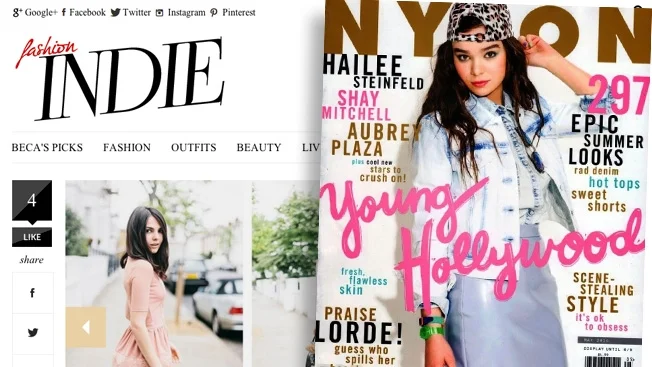
Nylon, the 15-year-old cutting-edge fashion magazine and Web site, has been sold to LA-based private-equity firm Diversis Capital and will be combined with FashionIndie.com, its recently purchased digital outfit.
The move will push out the co-founders, Editor-in-Chief Marvin Scott Jarrett and his wife, Jaclynn Jarrett, the mag’s publisher.
The new chief executive will be Joe Mohen, founder of Election.com, while Dana Fields, a former publisher of Rolling Stone and ex-president at lad mag FHM, gets the call as publisher and chief revenue officer. FashionIndie’s Daniel Saynt will be the chief creative officer.
“We shocked everyone because we’re combining a profitable fashion magazine with a profitable fashion Internet company,” Mohen said.
FashionIndie specializes in so-called “native advertising,” which runs sponsored ads that resemble editorial. Blogs include “Wendy’s Lookbook” and “The Blonde Salad,” by Chiara Ferragini, and others that run posts that collectively pull in about 8 million followers.
The company will be called Nylon for now, Mohen said. FashionIndie will join its sibling at the mag’s Soho headquarters.
Terms of the deal were not disclosed.
“Obviously, the big upside is digital, but we think we can still grow the print side as well,” Mohen said.
Marc Luzzatto, chief executive of Diversis, vowed to make “very significant investments, minimum of seven figures, to develop the digital side.”
“We expect we will keep the majority of the full-time staff,” Saynt said, noting that a search is under way for a new editor-in-chief to succeed Jarrett. Nylon Executive Editor Ashley Baker has been asked to stay on.

Luxury Jewelers Collaborate with Bloggers
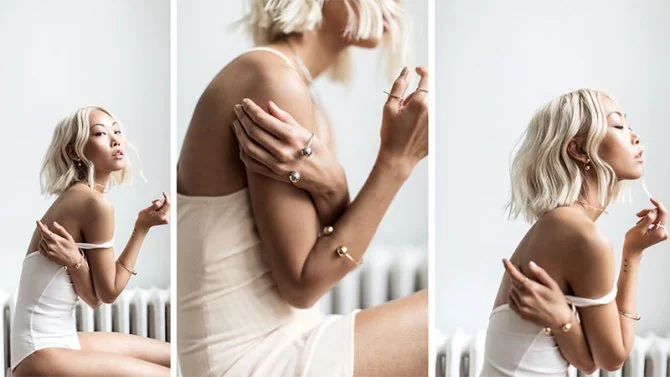
Many bloggers started out as passionate and unbiased lone reporters, but today some have managers and contracts and charge thousands of pounds for a mention. And watch and jewellery brands are increasingly seeking to capitalise on their influence.
Coronet Diamonds attracted 30,000 Facebook likes within a week of launch, which the brand attributes to its relationships with fashion and lifestyle bloggers, such as Italian street style blog The Blonde Salad, which claims to receive more than 110,000 views daily.
Coronet, which was launched last year by Aaron Shum Jewelry, a Hong Kong manufacturer, worked with Vokent, a Californian digital marketing agency. Coronet’s products will be sold by Chow Tai Fook, a Chinese retailer with 2,000 points of sale in 400 Asian cities.
“Forty per cent of the Google results for branded and technical watch terms are blogs and forums,” says Florent Bondoux, head of strategy and client services at Digital Luxury Group, a strategy and research company that has identified more than 200 luxury watch blogs outside China. Fewer than 10 of them capture 90 per cent of watch aficionados.
Ledbury Research recently found that the biggest marketing activity for 75 per cent of UK luxury industry chief executives was investing in ecommerce and social media platforms.
Successful bloggers have moved beyond charging for advertising as their only revenue stream and work with consultancies such as New York-based Digital Brand Architects to secure collaborations ranging from creating content to tailor-made promotions, events and design projects.
Prices vary from nothing and free products to as much as $10,000 for a featured post, according to Daniel Saynt, founder and creative director of Socialyte, a collective that calls itself an influencer casting agency. “Factors include the influencer’s fan base and the success of previous campaigns.
Established street photographer Scott Schuman of The Sartorialist blog has shot campaigns with Tiffany & Co and Saks Fifth Avenue. Such collaborations mean bloggers can earn more than $50,000 a session, says Mr Saynt.
Piaget recently flew five bloggers to its Geneva headquarters to shoot and style a digital campaign for the Piaget Rose collection.
“When measuring the success of such collaborations, we consider the influence of the bloggers – the number of their fans, followers and views,” says Atissa Tadjadod, Piaget communications director. “We saw awesome articles about this partnership in New York, Los Angeles, France, Germany and Spain, where the Piaget Rose creations were beautifully showcased in very modern interpretations.
Tacori partnered with Wendy Nguyen a fashion blogger from Wendy’s Lookbook. She was announced as brand ambassador and commissioned to design a Promise bracelet, in a campaign culminating in editorials, videos and banner space on her site.
Tateossian chose five British menswear bloggers to design limited edition bracelets which launched at London Collection: Men 2014, although Tateossian says no fee was involved.
“Most smaller fashion sites that adopted a traditionally journalistic approach are barely making enough in ad revenue for it to be anything more than a hobby,” says Mr Saynt.
Jamie Beck and Kevin Burg of Ann Street Studio worked on photography for Chopard’s website and Tumblr account. Aimee Song, the fashion blogger behind Song of Style, has promoted Tiffany & Co’s Atlas collection.
Anish Bhatt, founder and editor in chief of Watch Anish, says: “The challenge when working with brands is to offer them something new and efficient. With social media, companies are able to see a much deeper penetration plus clearer analytics and return on investment than is possible through more traditional methods.”
Most brands including Patek Philippe, Cartier, IWC and Vacheron Constantin work with bloggers. But when it comes to a social media strategy, some brands are cautious.
“In the short term, our customers interact with Patek Philippe via our website,” the company says. Panerai says it is currently updating its social media strategy.
When asked about the risks in paying bloggers for content, several Richemont-owned brands declined to comment.
Fashion We Like founder and content strategist Haris Stavridis whose clients include de Grisogono says: “Savvy bloggers now act more like media companies. Brands are looking for return on investment and are open to bloggers as worthy collaborators.”
Scott Galloway, clinical professor of marketing at the NYU Stern School of Business and founder of L2, a think-tank for digital innovation, advises: “The best collaborations let bloggers do what they do best: curate content that resonates with their established audience.
“Discerning readers will quickly detect when a blogger has gone corporate.”

How Street Style Stars Get Dressed for Fashion Week
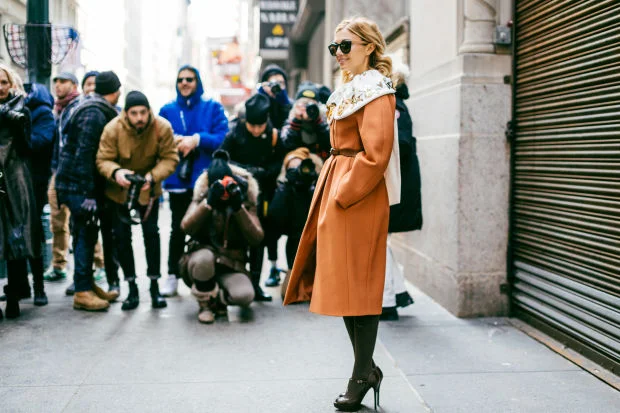
There's just days between now and the beginning of Fashion Month, and while some of us are trying to figure out which thick winter coat will elicit the least side-eye from chic showgoers, you can bet that fashion's biggest street style stars are doing a different kind of preparation entirely. For these fashion influencers — high-profile editors, trend-making retail buyers and, more often than not, style bloggers — getting dressed for fashion week is a serious, time-intensive endeavor.
After all, street style stars aren't just sitting front row next to fashion-y Hollywood stars like Lupita Nyong'o, Kristen Stewart and Whoopi Goldberg, they're also reaping the benefits that A-listers usually enjoy, including borrowing hot ticket pieces from the design houses. For example, the ubiquitous Chiara Ferragni (also known as the Blonde Salad) and Brazilian blogger Helena Bordon got their hands on those ripped-from-the-runway, head-to-toe Moschino Barbie looks just hours after the spring 2015 collection was shown at Milan Fashion Week. Even smaller, lesser known bloggers and Instagram stars are in on the game.
So why do these bloggers and non-celebrity fashion types enjoy the privileges of borrowing coveted pieces — either samples from the showrooms or straight from the runway? "I think street style stars who have a big enough following have the power to launch a new item and create a trend," said Gabriele Hackworthy, fashion director of Net-a-Porter's Porter magazine, over the phone. "Street style opened up the idea of personal expression and how to interpret different styles, so it gives the consumer more options when they're looking to buy something new, buy into a brand or buy an item."
The actual lending process can work in a number of ways. "It really originatesorganically from relationships that you have with PRs," explained Kate Davidson Hudson (above right), the oft-photographed CEO and co-founder shoppable online magazine Editorialist. Through her established network, she enjoys her pick of one-of-a-kind designer samples and off-the-runway pieces. Brands either send lookbooks to chosen influencers for selection, or interested parties will reach out to designer reps prior to Fashion Week.
"There are a few showrooms that I work with or that I like to borrow from," explained a street style regular and industry professional, who happens to have a blog — but does not consider herself a blogger — and who prefers to remain anonymous for this story. "I go by and go, 'Do you have anything cool?' Because maybe it’s going to be cold and I don’t have 14 different coats. They send it [t0 me] and when Fashion Week is over, I send it right back." She also likes to "shop" the samples, usually sizes 2 and 4, much like she would peruse a vintage store full of stand out, one-off items. She then mixes her loans in with her existing (and already stellar) wardrobe.
Davidson Hudson, who attends the New York, London and Milan shows, is drawn to the more dramatic and editorial pieces that usually never make it into stores. "I think the pieces that go down the runway — that aren’t necessarily produced — are the pieces that I get really excited about," she explained. "They have a really strong point of view and are so directional that they just don’t trickle out or flesh out on the commercial level. I think a lot of people in our set, the fashion set, get really excited about [wearing those pieces]." Her favorite Fashion Month loans: a hand-embroidered runway bag from an unnamed French designer and a vintage Van Cleef & Arpels multi-colored cabochon necklace.
In other instances, the loan arrangement is, unsurprisingly, an actual business deal. "This is something we do a lot of, especially throughout Fashion Week," explains Daniel Saynt, executive vice president of digital atNylon and creative director of Socialyte, a digital influencer casting agency that's worked with clients such as Botkier, Dolce Vita and Sigerson Morrison. "The brand can pay for the influencer to wear specific items in the hopes of being a part of street style coverage, whether it’s in a publication like Nylon, on The Sartorialist or [to be shot by] Tommy Ton."
New York boutique and clothing label Otte lends samples from its in-house label to bloggers for Fashion Week and, if it makes sense, will work out larger partnerships, usually involving a guaranteed number of Instagram photos with tags and mentions showing the lent pieces on the borrower's blog. Plus, "a lot of these guys usually ask for an actual cash fee," said Otte Vice President and COO Nancy Zhang, while also explaining that's tough for a small brand. "We typically try to avoid cash fee, so we do a lot of gifting and gift card arrangements as well." However, the actual numbers seem to be an unspoken practice when it comes to influencers discussing amongst themselves. "I'm sure there are [street style stars getting paid to wear lent clothes]," the anonymous street style star told me. "But I don’t think we talk about it like that to each other."
Oh and by the way, the street style star isn't the only one who's getting paid. "Sometimes we hire street style photographers to specifically shoot certain influencers," explained Saynt of Socialyte. "We had a group of 10 influencers wearing specific products and we had two street style photographers who were hired to shoot those influencers and sometimes that content becomes part of what we’re shooting for a publication."
In any case, the loan arrangement preferably involves synergy between the designer and the influencer's sartorial sensibility: The brand wants to convey its core aesthetic to consumers, while the influencer wants to keep control over her signature style, both for herself and her audience. "[For Fashion Week,] I only work with brands that I would wear anyway, and that I work with the rest of the year," style blogger Peony Lim (above) explained over email. "So it is really natural." Designer Jill Stuart says she only lends out runway and collection pieces to bloggers and influencers who "have a style, mood and aesthetic sensibility that complements the brand."
There's also the question of whether or not all this loaning (plus gifting and wheeling and dealing) takes away from the spontaneity and validity of what street style was in the first place. "There’s this authenticity," said Logan Horne, co-founder of the Model Me app and celebrity stylist who's worked with "It" girls like Mia Moretti and model Erin Heatherton. "It's very transparent to me at least when something isn’t genuine."
As for tell-tale signs of borrowed clothing? When someone is wearing a head-to-toe, off-the-runway ensemble (especially when it's immediately following a show or the release of a look book) or a one-of-a-kind piece that never made it into production. An influencer wearing a look that doesn't quite reconcile with her usual style is also a red flag that brings the word of the day — "organic" — back into play.
In terms of which street style star borrows what, there's a system to that, too. Davidson Hudson says that the influential editors go for more directional, runway pieces (like a "hand-painted peacock feather bag" sample), while high profile buyers will wear the more commercial styles that may convert into sales from their customers. For bloggers, it's across the board, but there always is that girl wearing a Nickelodeon cartoon character dress complete with matching bucket-bag and heels.
Street style stars enjoy the privilege of borrowing expensive, highly coveted and sometimes one-of-a-kind designer pieces to wear during one of the most photographed times of the year, and, in certain instances, generate additional income. In return, brands get exposure and the support of Instagram stars and bloggers with hundreds of thousands of followers — but there are differing methods of quantifying the success of a loan arrangement. Brands that hire Saynt and Socialyte to run an official Fashion Week campaign receive an organized report with the exact number of impressions, social "likes" and "shares," plus a complete listing of news outlets where any street style photos were placed. "It’s a more effective media spend for [brands] than other forms of traditional media because some of these images go very, very wide," Saynt explained. "We’ve seen images in magazines like Vogue and definitely in Lucky."
With the advent of apps that make Instagram shoppable, including the popular LiketoKnow.It, brands have yet another way to measure the results. But that doesn't mean that a loan to an Instagram star with a strong following translates into immediate sales for brands."What we’ve seen through affiliate marketing is that during February and September months sales through retailers just completely drop," said Kaetlin Andrews, public relations manager for RewardStyle, which owns LiketoKnow:It. "I think that’s just because Fashion Week is unattainable. Most of our bloggers are linking to things right now that people can actually purchase. So during Fashion Week, people aren’t necessarily purchasing because clothes aren't readily available." But on the flip side, brands lending out samples works in their favor, as the loaned pieces (that sometimes turn into gifts) don't come out of their stock or take any sales out of the bottom line.
In any case, designers will still jump at the opportunity to dress the street style set. "The influencers'/bloggers' reach into the market can be vast, so I see it as being as beneficial as advertising," explained Stuart. "It’s putting my clothes into the overall consciousness." The girls borrowing the clothes know it, too. "We’re called 'influencers,' so if I’m wearing a skirt by a certain designer, it means I'm behind it and it means I like it," the anonymous street style star said. "People look and they’re like, 'Oh, who are you wearing?' I'm basically putting my name behind a designer or brand and that’s always beneficial for them." Plus, the rest of us get to enjoy moments like this:
Looks like ADR and Pharrell borrow from the same showroom. Anna Dello Russo outside the Louis Vuitton fall 2014 Paris Fashion Week show. Photo credit: Pierre Suu/Getty Images